


 |
| Credit: NASA/JPL/University of Arizona/University of Leicester |
Field of Science
-
-
Change of address1 year ago in Variety of Life
-
Change of address1 year ago in Catalogue of Organisms
-
-
Earth Day: Pogo and our responsibility1 year ago in Doc Madhattan

Showing posts with label Cassini. Show all posts
Showing posts with label Cassini. Show all posts
Saturn's Southern Lights
This Cassini false-color composite image is of aurora emissions (in green) eminating from the Saturn's southern polar region.
Saturn South
Saturn with moons Tethys and Rhea from a southern perspective.
 Credit: NASA/JPL/Space Science Institute
 Credit: NASA/JPL/Space Science Institute
Images In The Raw #3
This shot of Saturn's moon Enceladus was captured by Cassini on April 26, 2010.
 Credit: NASA/JPL/Space Science Institute
Spiral Galaxy M51 and companion galaxy NGC 5195.
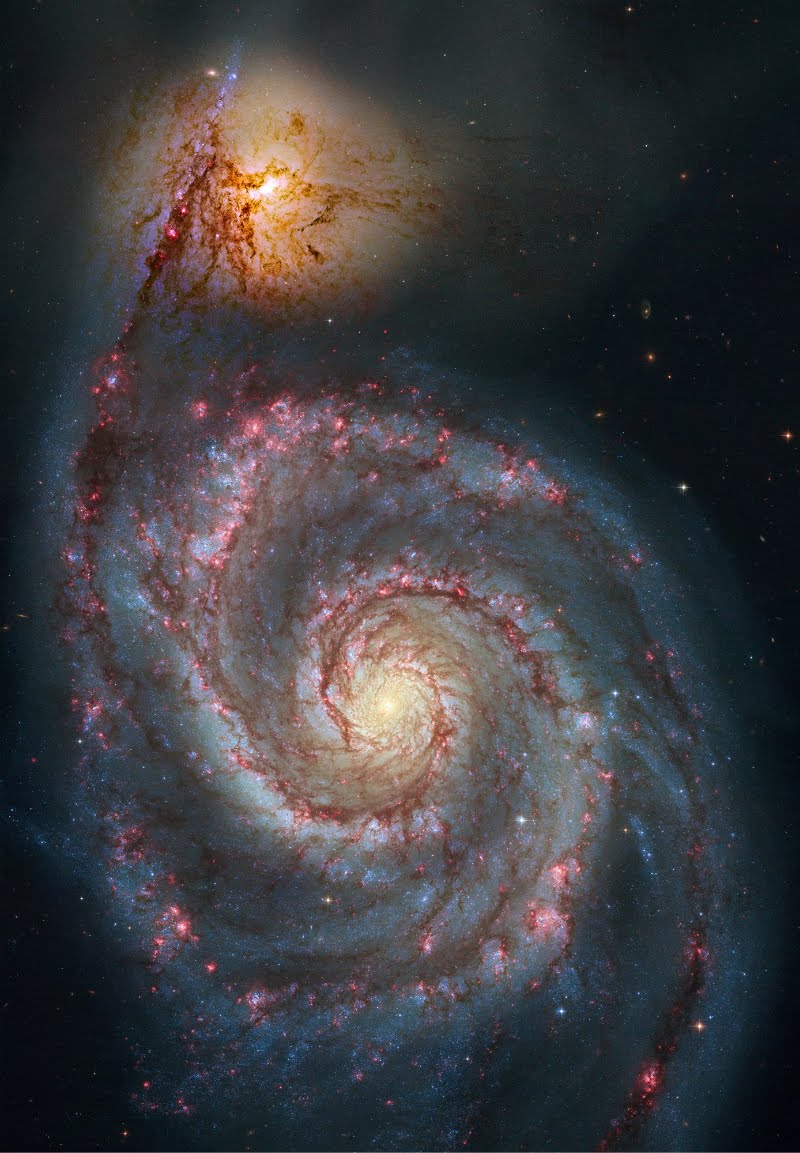 Credit: S. Beckwith (STScI), Hubble Heritage Team, (STScI/AURA), ESA, NASA
 Credit: NASA/JPL/Space Science Institute
Spiral Galaxy M51 and companion galaxy NGC 5195.
 Credit: S. Beckwith (STScI), Hubble Heritage Team, (STScI/AURA), ESA, NASA
Jupiter
 This true color mosaic of Jupiter was constructed from images taken by the narrow angle camera onboard NASA's Cassini spacecraft starting at 5:31 Universal time on December 29, 2000, as the spacecraft neared Jupiter during its flyby of the giant planet. It is the most detailed global color portrait of Jupiter ever produced... -- NASA/JPL/SSI
 The Galilean satellite Io floats above the cloudtops of Jupiter in this image captured two days after Cassini's closest approach... -- NASA/JPL/University of Arizona
 On January 15, 2001, Cassini resumed repeated imaging of Jupiter as it began its departure from the Jovian system. At this time, and throughout the departure phase, only a planetary crescent was visible... -- NASA/JPL/University of Arizona
 This is a montage of New Horizons images of Jupiter and its volcanic moon Io, taken during the spacecraft's Jupiter flyby in early 2007... -- NASA/JHU/APL
Mission to Jupiter -- With its suite of science instruments, Juno will investigate the existence of a solid planetary core, map Jupiter's intense magnetic field, measure the amount of water and ammonia in the deep atmosphere, and observe the planet's auroras. Juno's principal goal is to understand the origin and evolution of Jupiter. Underneath its dense cloud cover, Jupiter safeguards secrets to the fundamental processes and conditions that governed our solar system during its formation.
Mission Timeline: Launch - August 2011; Earth flyby gravity assist - October 2013; Jupiter arrival - August 2016
 Image credit: NASA/JPL

Enceladus
Blobs of warm ice that periodically rise to the surface and churn the icy crust on Saturn's moon Enceladus explain the quirky heat behavior and intriguing surface of the moon's south polar region, according to a new paper using data from NASA's Cassini spacecraft. -- Press Release
 Credit: NASA/JPL/Space Science Institute
 Credit: NASA/JPL/Space Science Institute
Saturn's Moons
Cassini imaging team has created a video collection of "mutual events," which occur when one moon passes in front of another, as seen from the spacecraft. -- Press Release
Below are two of the images used to create the videos.
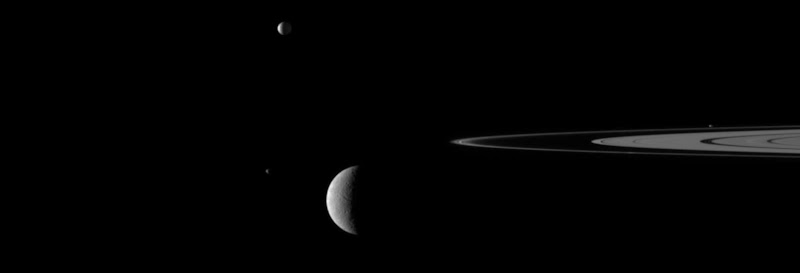
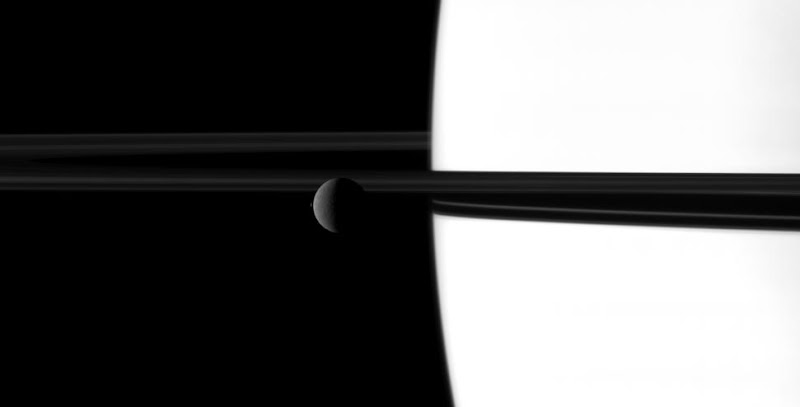
Images Credit: NASA/JPL/Space Science Institute
Below are two of the images used to create the videos.


Images Credit: NASA/JPL/Space Science Institute

A View of Earth from Saturn
This composite image taken by Cassini entitled "In Saturn's Shadow" showing Earth passing behind Saturn's outermost rings is among the finalists in NASA’s Earth Observatory's Favorite Image of the Day anniversary poll, and is my favorite. You have until the April 27th to vote. Credit: NASA/JPL/Space Science Institute Courtesy: CICLOPS
 Credit: NASA/JPL/Space Science Institute Courtesy: CICLOPS
Subscribe to:
Posts (Atom)